

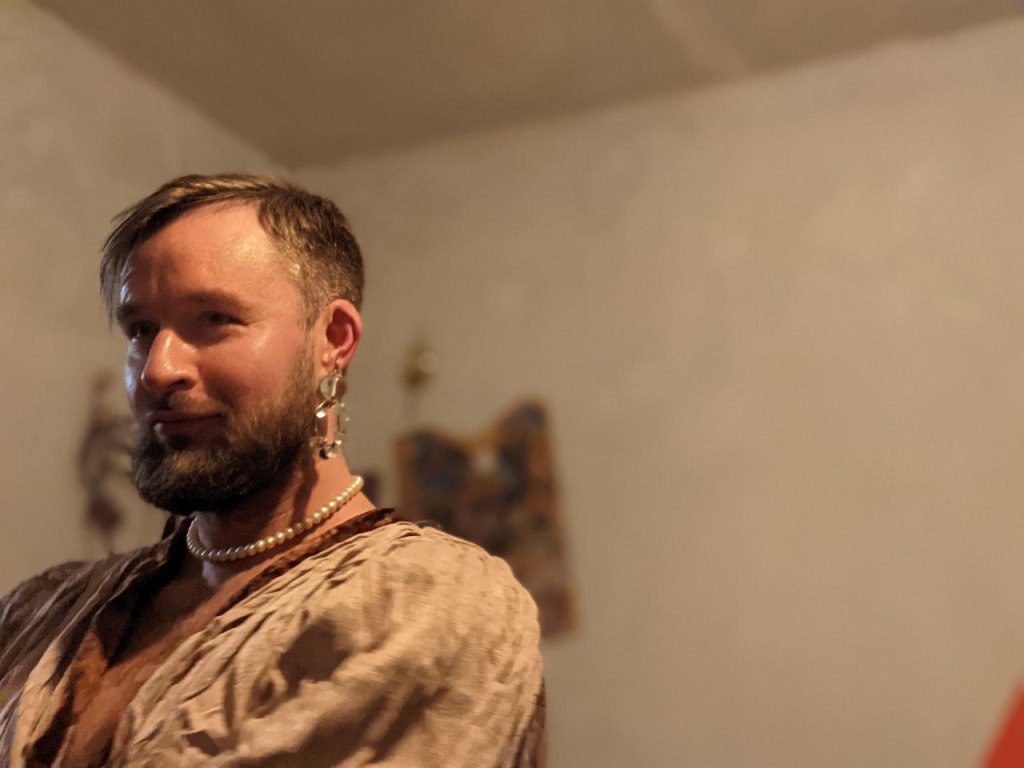
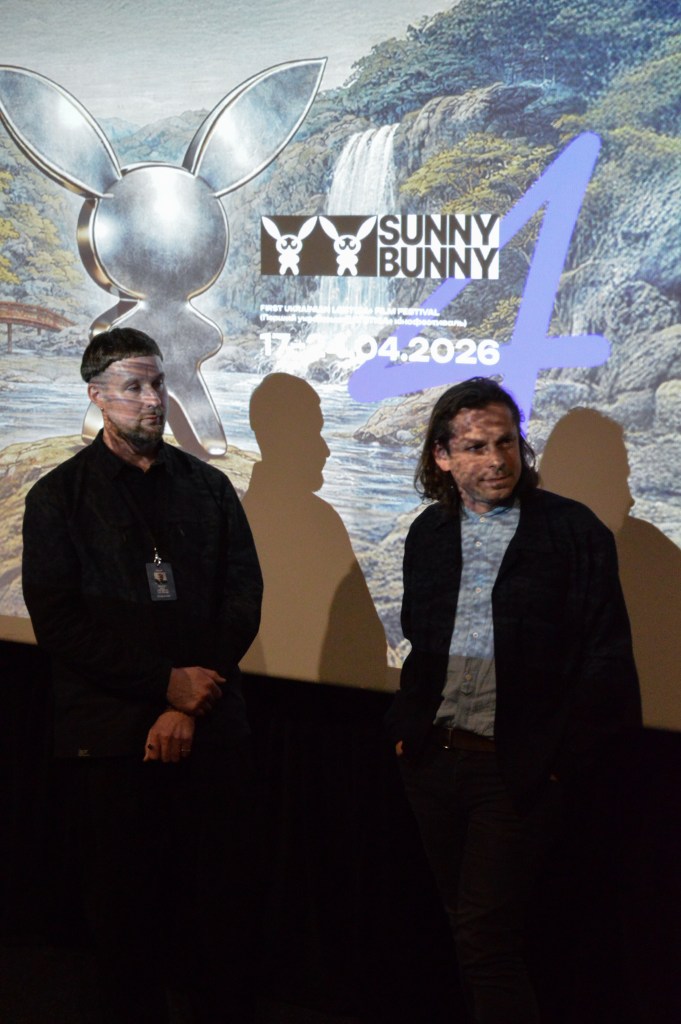
I’m Bohdan Zhuk, director of the Sunny Bunny Film Festival. I’ve also been working with the Molodist Film Festival for the past 12 years. From the very beginning, I was involved in the Sunny Bunny program, which gradually expanded and eventually became a separate festival.
I think humanity is doomed
A communal experience matters — gathering together, watching films, talking about them. Especially now, when — let’s be honest — social bonds are just falling apart. Globally. Wars, technologies, the way they work on us. And in Ukraine it’s its own story — social ties breaking down for additional reasons, including the actions of the Ukrainian government, the policies they’re pushing through.
And I think humanity is doomed if it’s not able to make some kind of change—and it would have to be a very noticeable, conscious shift.
Of course, with all these wars going on, I’d like to ask: you travel to film festivals abroad. What has your experience been like discussing the war in Ukraine in those settings?
I was talking to a friend recently, and it really struck me how paradoxical this is. If you compare the narrative of the Russia–Ukraine war and the Israel–Palestine war, there’s a clear tension there.
On one hand, our story looks quite black and white: Russia is the aggressor, Ukraine is the side under attack. Even though I don’t really like using the word “victim” for ourselves, the fact is we are going through suffering and dealing with the consequences of aggression from another state. In that sense, it feels pretty straightforward.
At the same time, the Israel–Palestine story is extremely complex. It’s anything but black and white. And yet, their narrative is often presented in a very simple, very clear way—and it works really well with a certain progressive audience, not just young people, but broadly progressive circles in Western Europe.
It seems to me that Palestine—or more precisely Palestinians in Gaza—end up framed as the “ideal victim.” A figure that easily fits into a recognizable victim narrative.
We don’t really have that kind of image, because for 12 years—or in some Western eyes, only the last four—we’ve been actively defending ourselves. For us, it’s a matter of survival. While in their case, that victim image is much easier to construct.
“well, what about American imperialism?” and then da-da-da-da
Yeah, you can often hear this kind of whataboutism from them—when we start talking about imperialism, it immediately becomes, “well, what about American imperialism?” and then da-da-da-da, the whole conversation gets shifted again.
But yes, I think what really matters is to keep stressing that this does not change the fact that Russian imperialism is also imperialism—and that it is also aggressive, and all of that. That’s exactly what needs to be emphasized. It seems to me that this may work slowly, but it does work.
We’re still often seen as some kind of “younger brother”—someone who needs to be taught, explained to, told how things are done properly. Honestly, I come across this quite regularly, even on a personal level.
At the same time, I think four years is actually a pretty short time to really change anything in people’s minds. I mean structural changes—in how Western Europeans, and Europeans in general, perceive us.
This condescending attitude is very subtle. It’s not always obvious, sometimes it’s almost invisible, but you can clearly feel it in the details. And I think a lot of the time people don’t even realise it—that they’re being condescending simply because you’re Ukrainian and they’re, supposedly, Western Europeans, so they think they know better.
But in reality, very often we actually know much better. That’s why maybe we should adopt the position of a kind of “older brother” or “older sister”—and be the ones explaining things back to them, instead of accepting that they have the right to lecture us. Of course, generally speaking, there’s a lot we can learn from them. That’s without question. But when it comes to this war in particular—this anti-imperialist war—our experience and understanding are much deeper.
Everyone is just completely fucked up and broken down after these four years of war
If we’re talking about mental health, then honestly, everyone is just completely fucked up and broken down after these four years of war.
And, probably, everyone is trying to find some kind of points of support, some kind of means of what you might call self-therapy.
Well, obviously, aside from going into psychotherapy.
 Queer War Archive