


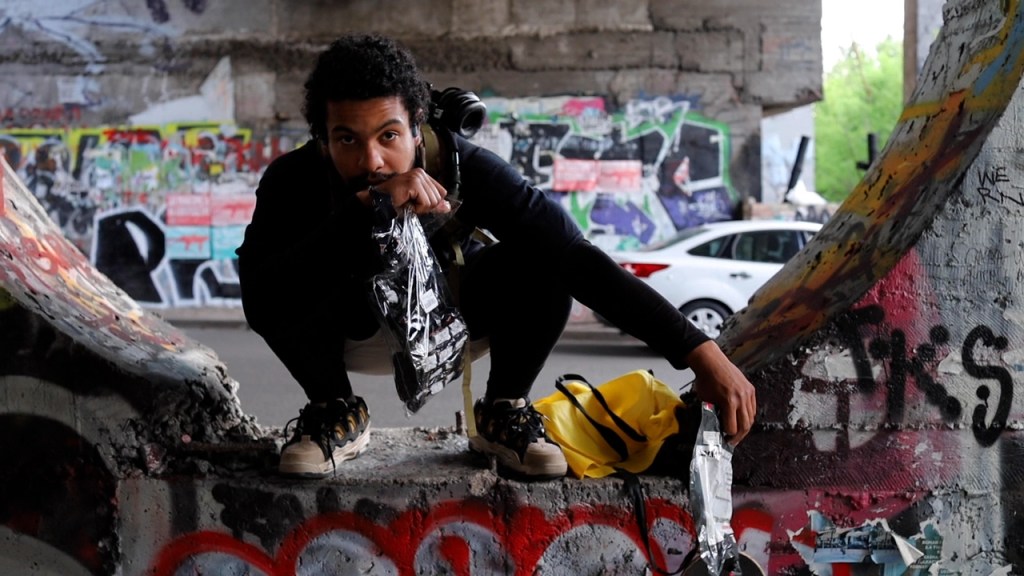
Panghoud is a DJ from eastern Ukraine, co-founder of the СОБРАНИЕ project (Kharkiv) and a resident of Shum.Rave (Slovyansk). They are currently a junior sergeant in the Armed Forces of Ukraine.
How did your service begin?
I’ve been here since February 28, 2022, starting in the Territorial Defense Force. From there, I went straight into service. Almost all of the original TDF were volunteers. Later on, there was a small round of recruitment — but really small. And almost the entire core of the TDF are people who joined as volunteers. Most of the time, I’ve worked in Donetsk region and, to a lesser extent, in Kharkiv region.
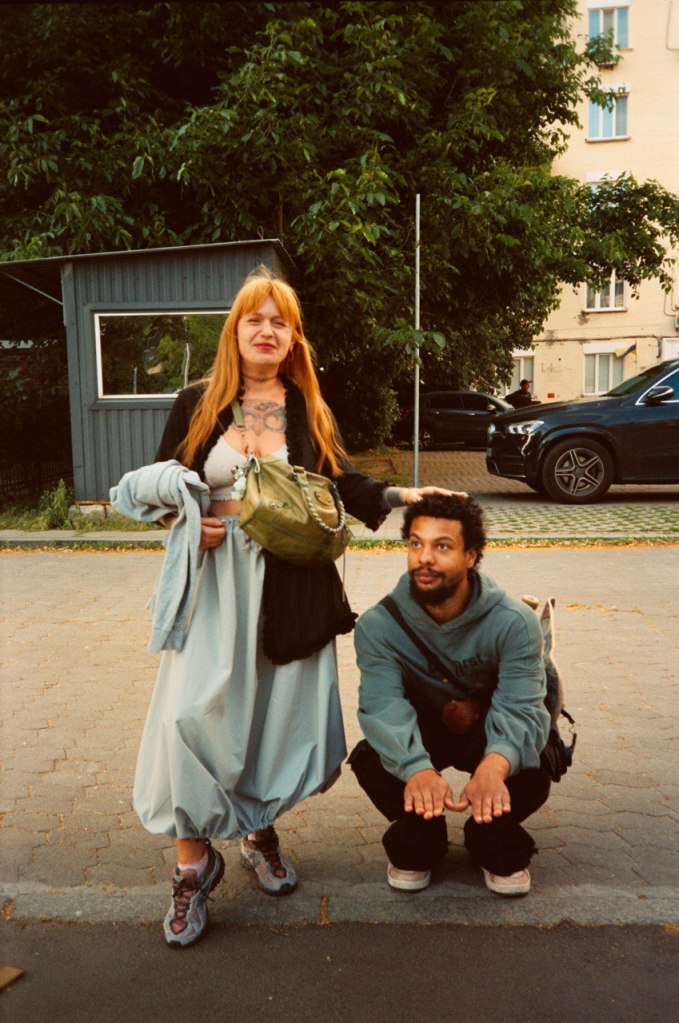
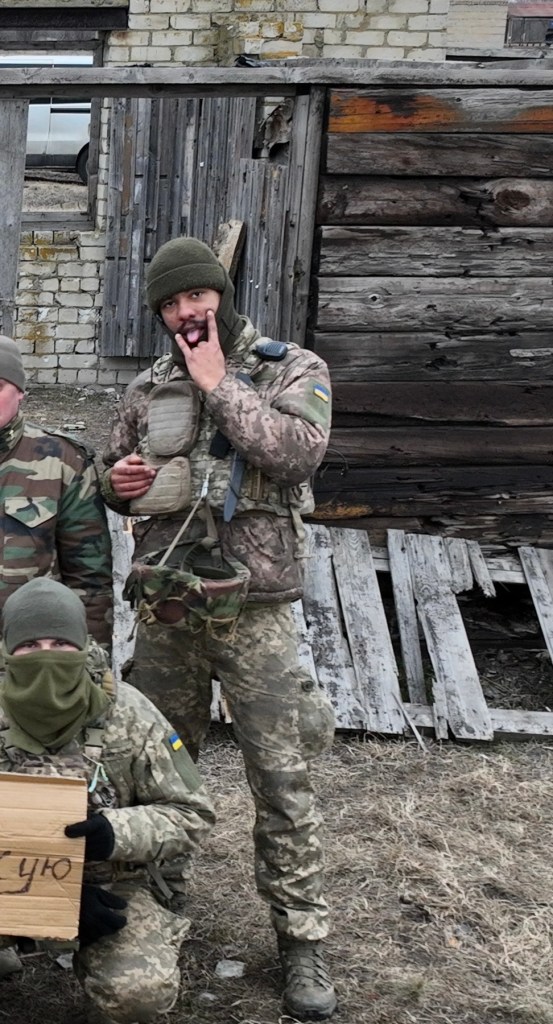
Life as a queer person — before the war and now. Do you clearly feel the difference?
Yeah, it definitely feels different now. Before the full-scale invasion, I kinda saw myself as a poly person. That realization came slowly — the awareness followed the practice, not the other way around.
At the start of 2023 we had a really tough combat order, with an aftertaste of PTSD. Sometime after that… Even before the invasion, I’d already changed a lot on the outside. Now I look more like I used to, but back then I had to put on a lot of weight and change my appearance. I used to have long, kinda dyed hair. By late spring–summer 2022, I looked totally different — about 15–20 kilos heavier, shaved bald, the whole thing. At some point I realized that was giving me dysphoria. That’s when it clicked.
And that’s pretty much how it’s been rolling since 2023. Now it’s easier, mostly because my job is calmer. All my direct coworkers already know I’m somehow involved with LGBTQ+ activism or something along those lines.
For example, they know that our trans lobby raised money for some FPV goggles or other gear.
Yeah. They’re aware of that, but they don’t really know details about my personal life. They know I’m officially married — and that my partner is non-binary. Just a small number of colleagues know more. My commander knows. I even introduced them, because a commander should be aware of their subordinates’ lives.
Other than that, in my circle it’s more of a discussion-level thing. Our team is small. When we’re bored… we see each other all the time, so we talk a lot. We often disagree on things, which is fine. But I wouldn’t say I’m completely open. With them, I use he/him pronouns and don’t really share much about what I do in my personal time.
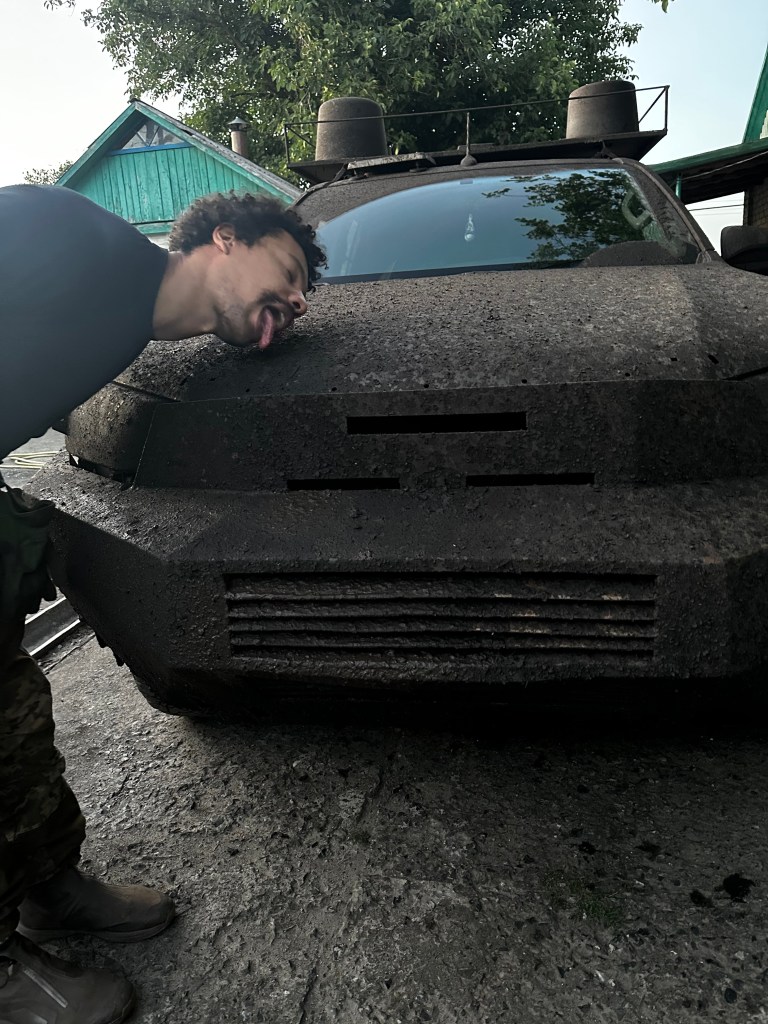
You say the commander knows their subordinates’ personal lives. Psychological profile?
Of course. You have to know when your subordinate’s melting point is — what exactly will cause them the most stress. You should know, more or less, their preferences. Understand their quirks so you can figure out who to put together in a crew or a unit. How to split people into groups. Who will get along and who won’t. Who is better suited for which tasks. Obviously, you need to know as much as possible. There are limits, of course, but you need to know and understand your personnel. That’s a necessity.
What questions did Western media ask you?
I’m a bit cut off from the wider world, from mainland Ukraine. I need to get out and see for myself what’s going on. I’ve been interviewed by Western media maybe three times. Only once or maybe a second time it was about queer topics. Mostly it was more about me being a DJ. Especially in 2022, when that was a hotter topic for Western outlets. In 2023 they asked about the queer scene here. And, well, we’re kind of the queers here. Honestly, I can’t really remember what exactly we told them, but the idea was basically that, first of all, visibility of Ukrainian queers is increasing.
How does the situation in Palestine affect queer culture, and what’s the discourse around it in Ukraine?
Anyway, maybe I’m rambling. In principle, I’m for helping where we can. But in practice, most of my donations go to the Ukrainian army, or to Ukrainian initiatives and issues — rebuilding efforts and so on. A small portion goes to international aid. Still, I really believe in the need to stand together. It’s all part of the same bigger problem of colonialism — just in different places. Whether it’s Israeli colonialism or Russian colonialism, it’s the same thing at its core. In theory, Russia could just leave the war and, roughly speaking, our trouble would be over — then we’d “just” need to rebuild. But Palestinians… that’s a whole other level of nightmare. From my friends who have gone abroad, almost all of them are helping Palestine now. Which, I mean, makes sense — the situation there is horrible. But it does kind of overshadow the visibility of our own issues. And yeah, things are bad in a lot of places right now. At least we still have a state to lean on, some kind of centralized structure to hold things together.
Before 2022, things that mattered to me were public activism, supporting queer-focused events or actions, maybe music events — queer parties, Pride Hub events, or gatherings organized by the Kharkiv community. After 2022, my work has basically been about making sure there’s still a possibility for public activism later. Making sure there’s still a country where that can happen.
Do you see any social shifts for LGBTQIA+ people? What prospects do you think they will have after the war?
In my case, I’ve actually been pretty lucky. In my unit… well, my involvement in activism isn’t really something everyone needs to know about. I had thought about transferring to another unit. I even talked to my therapist about whether I should come out in the new place. I still haven’t changed units, but I wanted to back then. Anyway.
As for social shifts — my environment is closed off. I can’t really judge society as a whole because I’m not directly in it. I only see what my algorithms feed me on TikTok or Instagram, and that’s very biased, very distorted.
Before 2022, things that mattered to me were public activism, supporting queer-focused events or actions, maybe music events — queer parties, Pride Hub events, or gatherings organized by the Kharkiv community.
After 2022, my work has basically been about making sure there’s still a possibility for public activism later. Making sure there’s still a country where that can happen. I value that a lot. I really value the possibility that Ukraine gives. So yeah, I know less now about what’s happening on a broader societal level.
How would you describe the current life of queer people in Ukraine?
This summer I went to a real voguing ball for the first time — wow. For me, that was such an experience. And it was in Kharkiv, which made it triple special, because it’s my hometown. One of the organizers and I had hung out back in the spring, chatting during breaks at the ball. And then here we were meeting again in the summer. In that time, he had also enlisted in the army.
Honestly, I don’t really know what else is going on. Like, Plisetsky — apparently he got mobilized too. Basically, yeah… that’s what’s happening: anyone who hasn’t joined yet, ends up joining. Some people have died. The state of the queer community is about the same as for Ukrainians in general. I saw there were anti-corruption protests. All the politically active people who usually take part — took part this time too.
Overall… I’m pretty conflicted about this constant need to fight for the queer community’s attention, even though I understand it’s important.
 Queer War Archive