

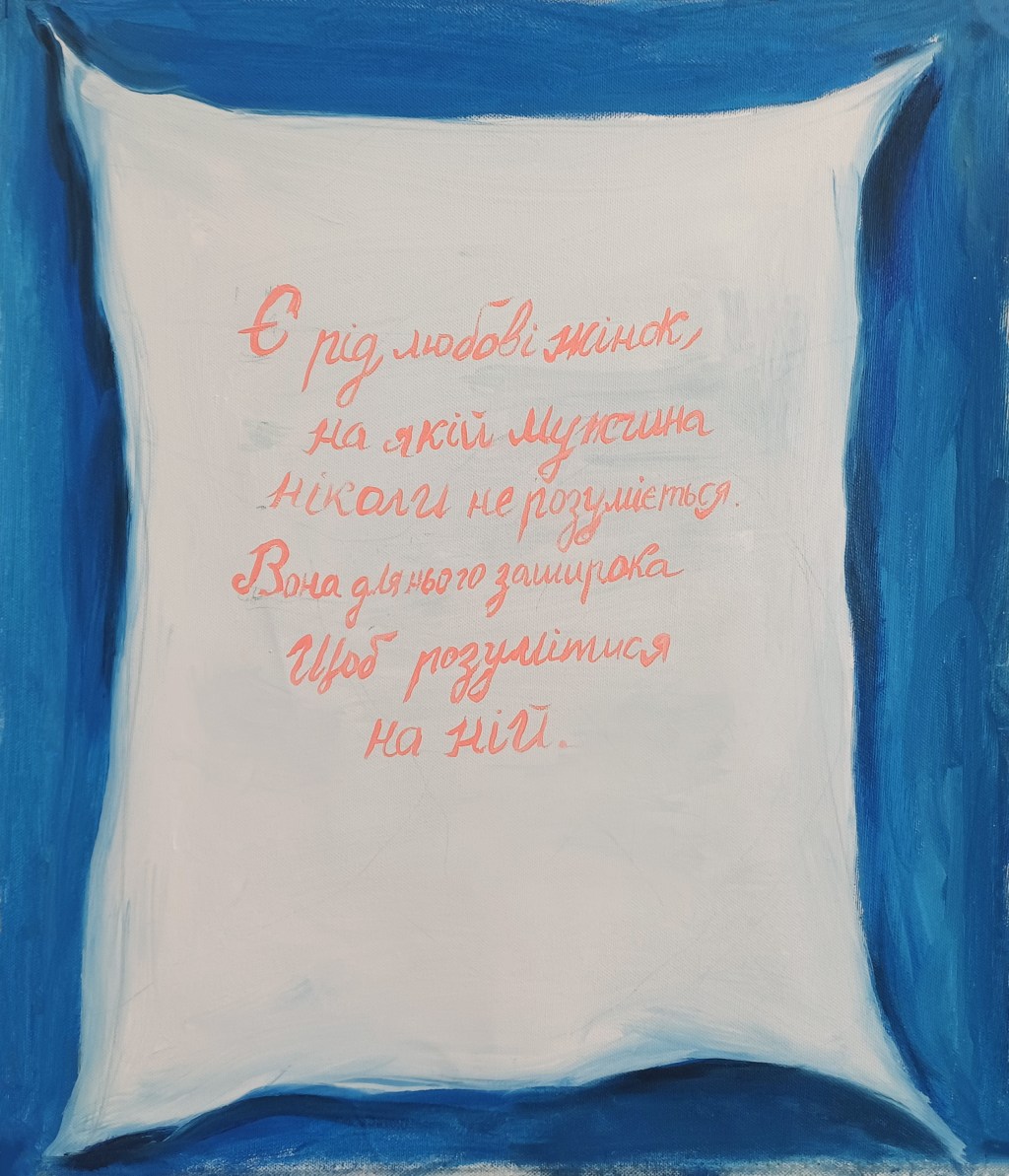
A utopian world of women without men. An idyllic harmony with nature, art, and mutual support for one another. In this world, there is no patriarchy, oppression, or dependency. A collective, independent female existence is filled with love for each other.

This world embodies the dreams of Olha Kobylianska, expressed in her “Valse melancolique” back in 1898, which at that time was a powerful gesture of emancipation. What was once the limit of dreams is becoming reality. The paintings depict a contemporary ‘women’s paradise’ in Ukraine, where female coexistence without men becomes an undeniable reality in the conditions of war. However, utopia always remains only a concept due to the impossibility of its existence. Because alongside this dreamlike womanhood, death walks nearby.

“When we remain unmarried women,” she said (she hated the term “old maid”), “we’ll live together. We’ll bring a third member into our company, because two isn’t enough to make any plans or establish any rules, and we’ll live. We’ll evaluate the third companion, figure out their traits, temperament, how well-educated they are, and how far their views extend into the past or future, and then we’ll accept them. Let those fears that people use to scare us about being unmarried-like loneliness, helplessness, eccentricity, and so on- come. We won’t be lonely. We won’t be ridiculous, or, so to speak, poor. We’ll have our own society, including men, of course, because without men, life is monotonous, and we’ll live as we wish. Then the crowd will realize that an unmarried woman isn’t an object of ridicule or pity, but a being who has developed fully on her own. That means we won’t be, for example, wives of men or mothers, but just women. Do you understand? We’ll be people who didn’t become wives or mothers but developed fully… I’m not saying I’m striving for that ideal. I live for art, and it completely satisfies my soul. “Valse mélancolique”, Olha Kobylianska.
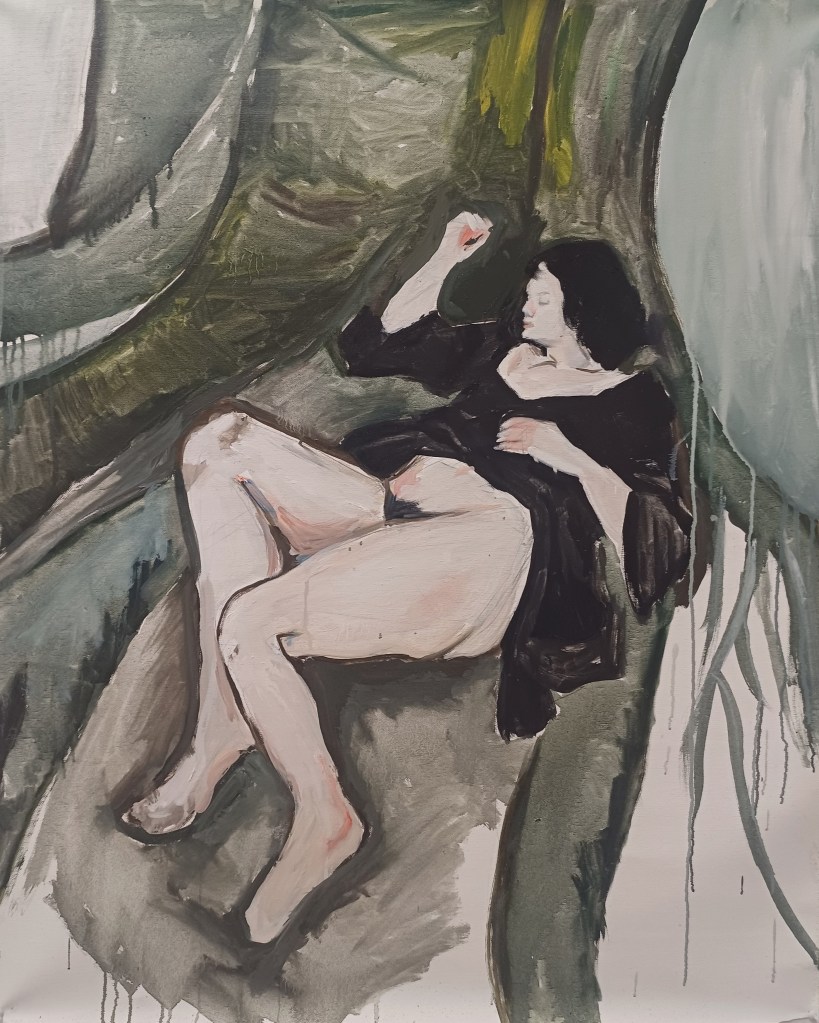
Olha Kobylianska (1863–1942) was a renowned Ukrainian writer and feminist, one of the first to address the issue of women’s emancipation in her works. She not only created texts that were innovative for her time but also shared a deep and tender friendship with Lesya Ukrainka — a poet who likewise actively advocated for women’s rights.
The novella Valse mélancolique is a bold emancipationist work for its era, portraying the lives of three young women who long for freedom from traditional roles, independence from men, and, at the same time, a profound, sensual closeness with one another. This story, along with the friendship between Kobylianska and Lesya Ukrainka, inspired my project.
I wanted to draw a parallel with the present day and reflect on a possible idyll of female coexistence. Perhaps, against the backdrop of war, when all the men disappear, peace might finally prevail… This could be a response to the utopian idea that wars will end only when there is no one left to fight them. After all, it is mostly men who create and sustain wars — just as they uphold patriarchy and imperialism. As long as men exist, wars will continue.
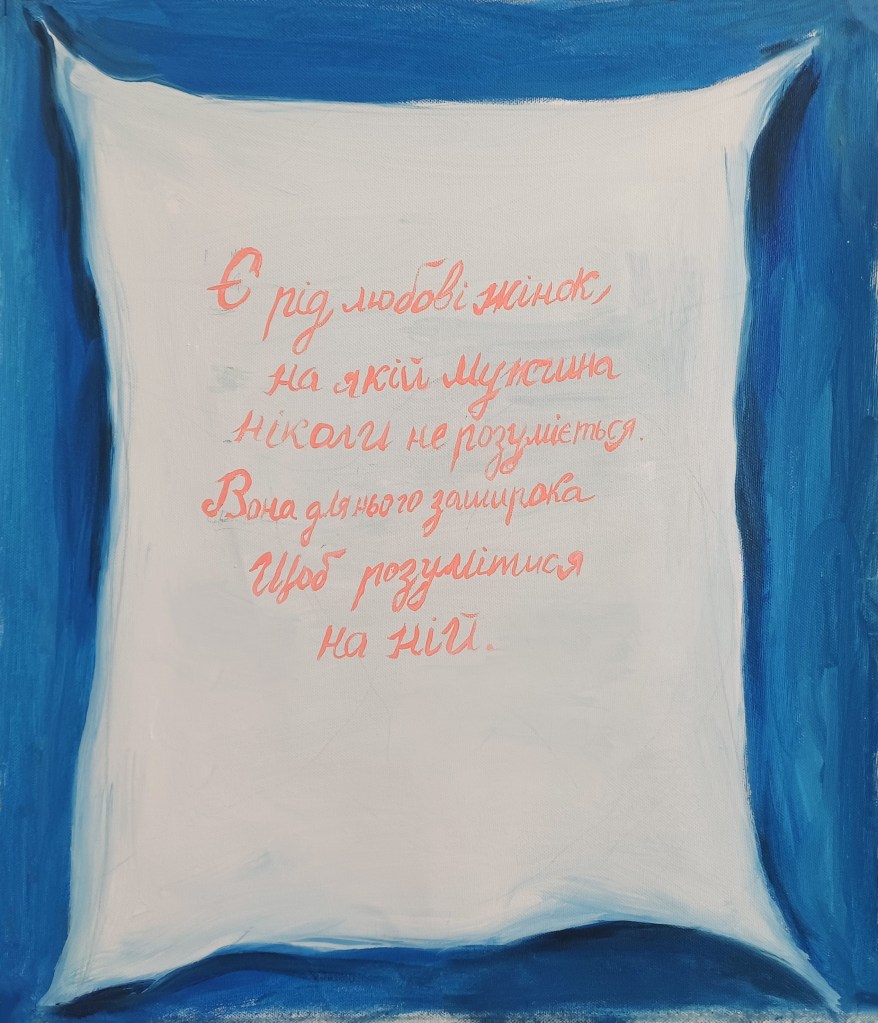
However, this utopia remains only a concept, impossible to fully realize. After all, women now also fight in wars, and regardless of gender, people suffer from the loss of loved ones. It is rather a hypothesis, a joke, or a way of making sense of a reality that often feels hopeless.
There is a kind of women’s love that a man never understands. It is too vast for him to fathom. “Valse mélancolique”, Olha Kobylianska.
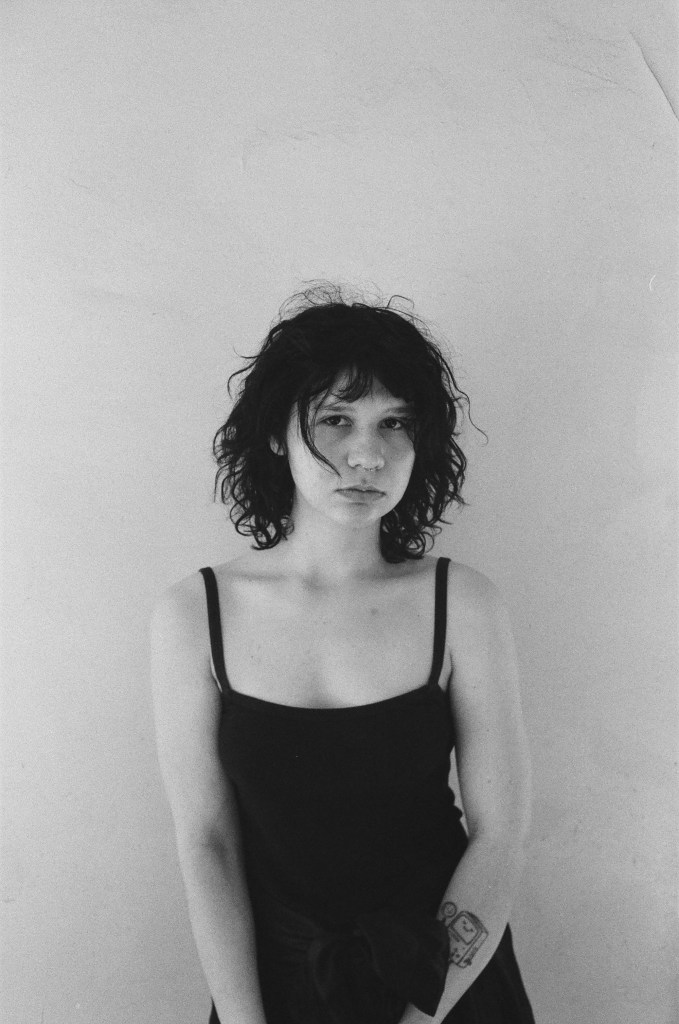
Ola Yeriemieieva is a multidisciplinary artist, born in 1997 in Kyiv. Her work engages with themes of corporeality, death, loss, and memory.
Between 2012 and 2016, she studied graphic design at the College of Kyiv National University of Technology and Design, where she developed a strong foundation in visual arts. After completing her bachelor’s degree in 2018, she further honed her skills at the Kyiv Academy of Media Arts, expanding her artistic repertoire.
The artist currently resides and works in Kyiv, where she continues to create impactful works that draw from her personal experiences and the socio-political environment surrounding her.
She is an artist whose work delves into the subjects of the body, mortality, loss, and memory, using mediums like photography, painting, and print. Her art is marked by a profound exploration of the fear of loss, where she captures ephemeral moments and turns absence into a form of resilience, influenced by the impact of war and her own experiences.
 Queer War Archive